NeuroCampur AI Global Series · Fireside conversation
When Numbers Shape Lives
Can we build AI that truly understands people?
A fireside conversation with Dr Khuneswari A/P Gopal Pillay of UTHM on data, statistics and what it takes for AI to understand the people behind the numbers.
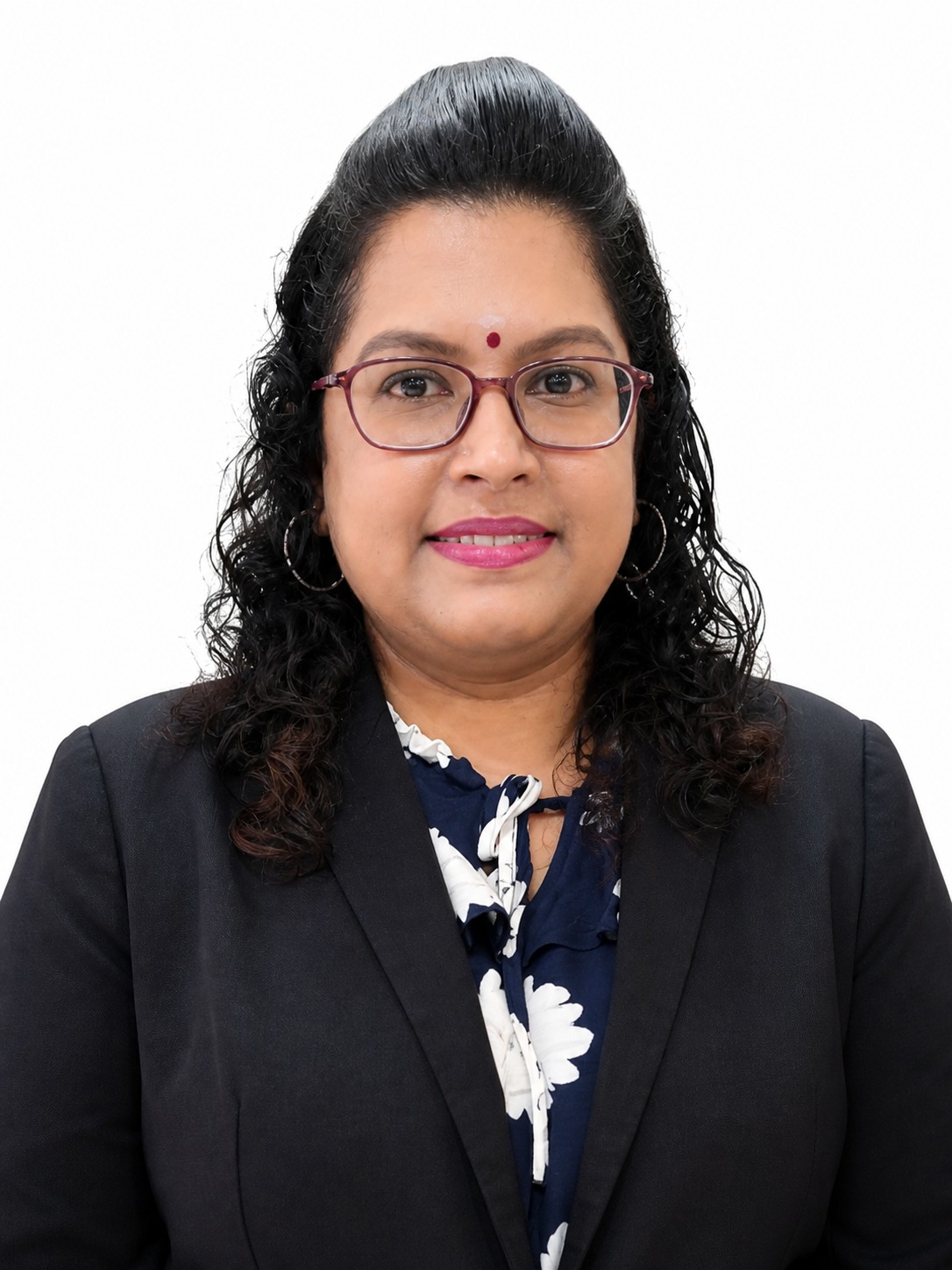
The speaker
Dr Khuneswari A/P Gopal Pillay
Senior Lecturer, Department of Mathematics and Statistics, Faculty of Applied Sciences and Technology, Universiti Tun Hussein Onn Malaysia
Dr Khuneswari Gopal Pillay is a Senior Lecturer in Statistics at Universiti Tun Hussein Onn Malaysia, based at the Pagoh Campus in Johor. Her work sits where statistical modelling, data analytics and talent development meet.
She earned her PhD in Statistical Modelling at the University of Glasgow in the United Kingdom, following a Master of Statistics and a Bachelor of Mathematics with Economics at Universiti Malaysia Sabah.
Her research spans econometrics, time series, regression, model selection and missing data, with applications in healthcare, economics, food security and the analysis of Malay language parliamentary debate. She is Principal Researcher with the Data Analytics, Sciences and Modelling group at UTHM and a Fellow of the Royal Statistical Society.
PhD
University of Glasgow
FRSS
Royal Statistical Society
DASM
Principal Researcher
UTHM
Pagoh Campus
- Fellow, The Royal Statistical Society
- Principal Researcher, Data Analytics, Sciences and Modelling (DASM), UTHM
- Head of Centre, Faculty of Applied Sciences and Technology, UTHM (2024 to 2026)
- Associate Researcher, Malaysian Institute for Research in Vocational Education and Training
- Member, Malaysia Institute of Statistics
- Life Member, Malaysian Mathematical Sciences Society (PERSAMA)
Research
Where her work meets people's lives
Model selection and missing data
Statistical approaches that reveal when apparently accurate models rest on incomplete information.
Malay language discourse
Analysis of Malay language parliamentary debate transcripts to understand public discourse and national priorities.
Food security and the economy
The links between interest rates, inflation and food security for Malaysian households.
Econometrics and time series
Forecasting methods that help policymakers anticipate economic pressure.
Health and wellbeing
Statistical applications in healthcare and other areas affecting human wellbeing.
Data science education
Teaching data science, data mining and statistical thinking to the next generation of Malaysian graduates.
Programme
Five questions for the conversation
- 1
When AI gets the numbers right but the reality wrong
How can we recognise when apparently accurate predictions are built on incomplete information, and what is at stake when certain communities or realities are missing from the data?
- 2
Can AI truly understand Malaysia's voice?
What can AI offer for understanding public discourse and national priorities, and how do we make sure it captures the cultural nuance of the Malaysian language rather than simply processing words?
- 3
Predicting economic hardship before it happens
Could AI help policymakers anticipate economic pressures on vulnerable households early, and what would it take to turn predictive insight into real improvements in people's lives?
- 4
Just because AI can predict something, should we act on it?
Where should we draw the line between AI supporting professional judgement and AI deciding for us, and how can researchers keep fairness, accountability and human dignity at the centre?
- 5
Preparing Malaysia's next generation to question AI, not just use it
Which statistical and critical thinking skills must universities keep cultivating, and what should Malaysian higher education do to produce graduates who can challenge, evaluate and responsibly shape AI?
Register for the conversation
Sunday 22 November 2026 · Online · 10:00 UK time / 18:00 Malaysia time · Free to attend
Only registered participants receive the online joining link. No website account is needed.
All queries: aisyah@neurocampur.com